Standing Behind the Blue Flags: A First-time FightCRC Experience I’ll Never Forget
By Meggan Werkheiser, Content Marketing Manager
I didn’t know what to expect when I arrived in Washington D.C. as a first-time volunteer for Fight! Colorectal Cancer’s Call-on Congress. The event kicked off Colorectal Cancer Awareness Month on Sunday, March 1, with 500 volunteers traveling to the area to plant flags and advocate change. I was thrilled my sister was along for the experience as well – twinning in our Worldclass Clothing Colonoscopy Enthusiast shirts, unaware the day would leave such a lasting impression.
More Than a Visual
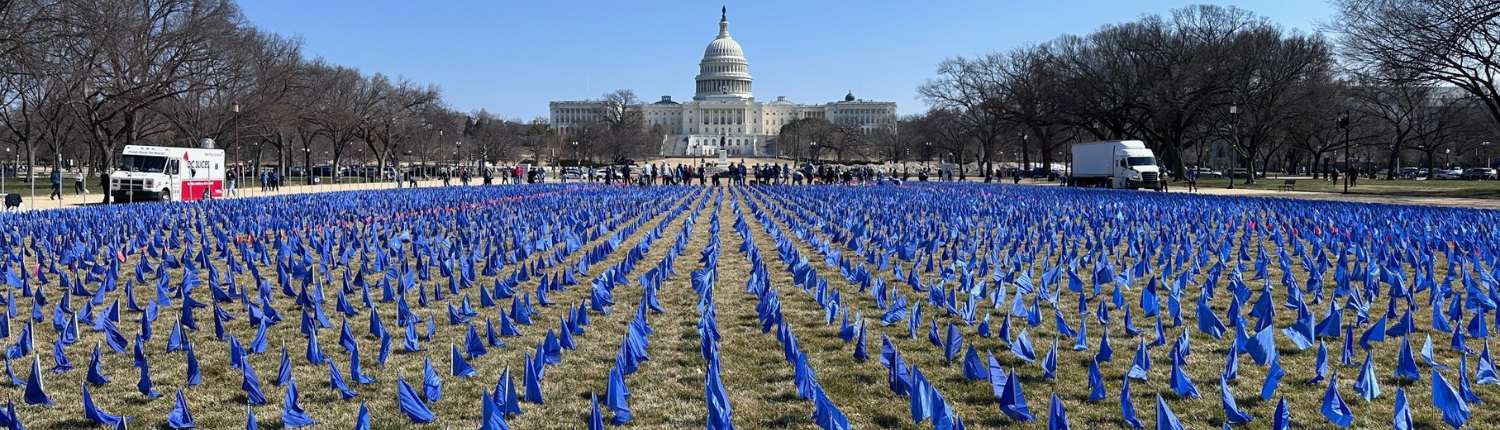
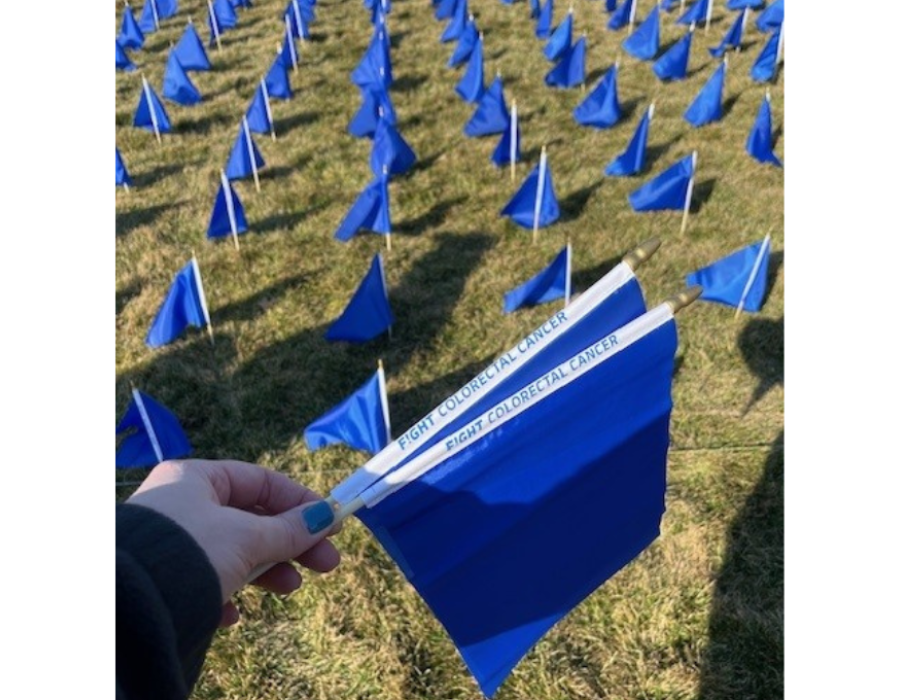
The first day was dedicated to planting more than 27,000 blue flags on the National Mall, directly in front of the U.S. Capitol. Volunteers came prepared – gloves, knee pads, winter hats and baseball hats, because who knows what kind of March day we were in for. I emphasize this part because the organizers at Fight! Colorectal Cancer have their itinerary down to a science, and the visual is what supports the message throughout the planned events, right down to those blue flags. Every row is checked. Every flag is straightened. If one flag is off, it’s fixed. Because if the visual is messy, the message is lost.
And the message couldn’t be clearer.
These flags represent lives—real people in their 20s and 30s— who are projected to be impacted by colorectal cancer in the year 2030.1
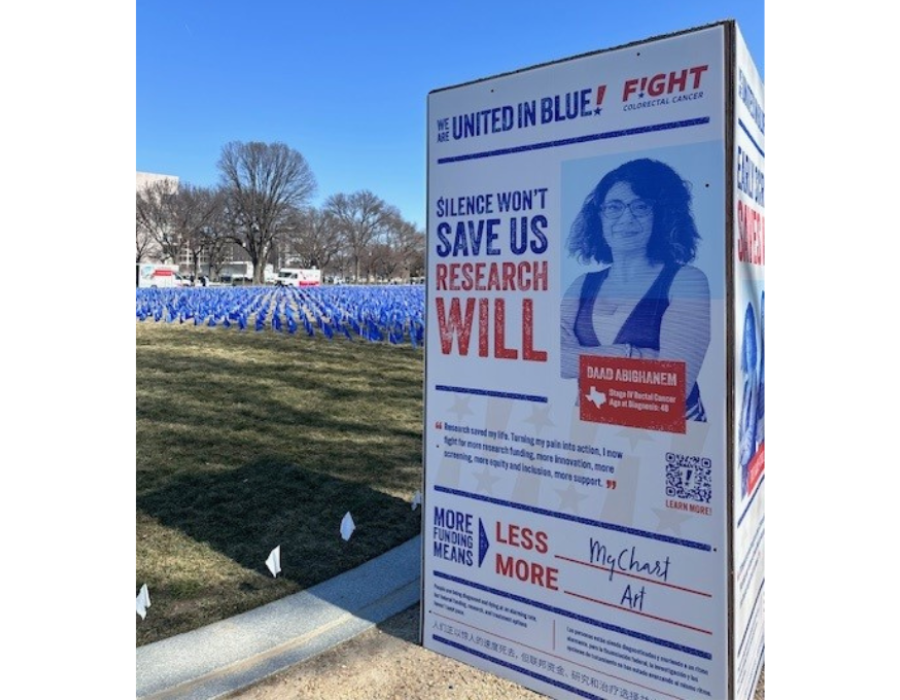
Yet today, the recommended age to begin screening for colorectal cancer is still 45.2 While that’s progress from the previous guideline to begin screening at 50, mounting research shows a troubling rise in diagnoses and deaths among even younger adults.1,3 At this time, people are being told they are “too young” for a colonoscopy, and many insurance plans will not cover the procedure below the recommended screening age.
That disconnect between risk and access is costing lives.
Stories That Demand Change
The second day of Call-on Congress brought us indoors, but the impact was no less powerful. FightCRC gathered advocates, survivors, caregivers, and supporters in a hotel conference room not only to inspire, but to train people on how to deliver their stories to Congress in a meaningful and impactful way.
The room vibrated with tears and then cheers, with stories from people who had been attending this event for five years in a row-- coming back again and again because they know this fight isn’t over.
One woman courageously chose to be at this event even though she was scheduled to receive chemotherapy the next day. Through wavering tears, she told us she felt this was that important-- that advocating for change mattered not only for her, but for everyone standing beside her and beyond.
Another woman shared that she had to fake symptoms just to get a colonoscopy because she was under 45. She was diagnosed with stage III colon cancer. Her story landed heavily. No one should have to exaggerate or fabricate symptoms to access potentially life-saving care.
On the third day, these empowered individuals stood in front of lawmakers to advocate for change when it comes to colorectal cancer screening.
Why This Fight Is Personal for Me
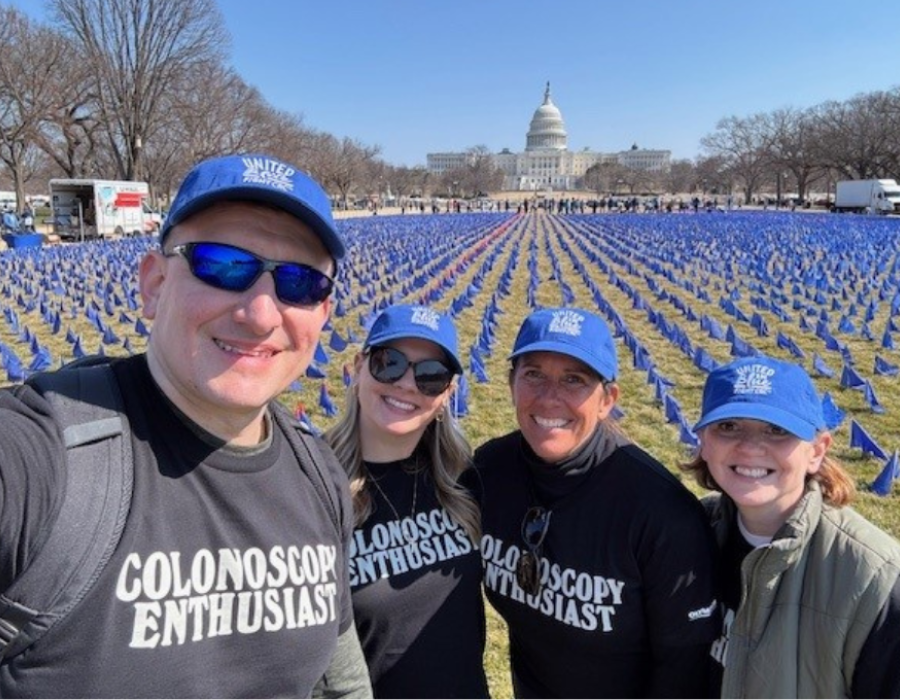
Olympus employees, Tamas Otvos, Meggan Werkheiser, Annie McGeary, and Meggan's sister, Kim Oates, planted flags during FightCRC's Call-on Congress event.
As I listened to these stories, I was reminded why I was there.
I was in eighth grade when my dad was diagnosed with colon cancer at age 45. At the time, routine screening didn’t begin until age 50, so cancer wasn’t even on his radar. He endured surgeries, chemotherapy, and radiation, but the cancer spread. He passed away at 49.
That experience impacts how I show up for my own health and for my family. My husband, like so many younger adults, was initially told he was “too young” for a colonoscopy at 38, even though his insurance covered it. As an Olympus employee, our health plan covers colonoscopies for employees and eligible dependents regardless of age, symptoms, or risk factors—removing one barrier, but not the need to advocate for care. So we kept pushing. Eventually, he found a physician who listened. During that colonoscopy, two polyps were removed-- one of them was precancerous. That procedure likely changed the course of his life.
That’s the power of access. That’s the power of persistence.
After returning from Call-on Congress, my 11-year-old son asked about the flags I was planting. I told him they raise awareness for colorectal cancer, a disease that took his grandfather's life in 2003 and increasingly affects younger people. I explained that the current screening guidelines recommend starting at age 45, which leaves people in their 20s or 30s who are increasingly at risk without resources to get screened. My son raised his eyebrows and looked confused. “Well, that makes no sense.” From the mouths of babes, I said as I hugged him.
The People Who Make This Movement What It Is
One of the greatest honors of this experience was connecting with fellow sponsors and volunteers and talking about our why. Why were we there? Why does this matter?
As I was planting flags and getting a well-earned blister on my thumb, the woman next to me introduced herself. She said she was a stage IV colorectal cancer survivor, and she never thought she’d be here for this day. These are the people driving this movement forward—not because it’s easy, but because it’s necessary.
Moving Forward, Together
Working at Olympus has shown me that early detection isn’t just something we talk about, it’s something we act on.
Standing behind those blue flags with my fellow Olympus colleagues, I felt immense pride— not just in being there, but in standing with an organization that truly walks the walk and supports FightCRC’s mission.
If there’s one thing to take away from this experience, it’s this: Advocacy matters. Stories matter. And early detection makes a difference.
Take Action
Learn more about colorectal cancer screening at colonoscopytoday.com
Support advocacy, research, and policy change by visiting FightCRC.org
Because the message behind those blue flags is urgent—and it’s one we can’t afford to ignore.
1. American Cancer Society Journals. CA: A Cancer Journal for Clinicians. 2024. Accessed March 27, 2026.
2. U.S. Preventive Services Task Force. Colorectal Cancer: Screening. Recommendation: Colorectal Cancer: Screening | United States Preventive Services Taskforce May 2021. Accessed March 27, 2026.
3. American Cancer Society. Colorectal Cancer Facts & Figures 2023-2025. 2023. Accessed March 27, 2026.