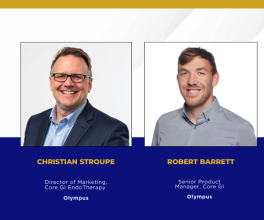
From Lesions Hiding in Plain Sight to Third Space Endoscopy, It’s All About the View
What does it mean to be a top performer? Davinderbir S. Pannu, MD, gastroenterologist at McLeod Regional Medical Center in Florence, SC, might know, as someone who performs a high volume of procedures and tracks his own adenoma detection rate (ADR). When it comes to visualization technology—digital, mechanical, or otherwise—he recognizes value in seeing more. In this episode of the DeviceTalks’ OlympusTalks podcast, he discussed the benefits of advanced imaging technology in his patient procedures, from colonoscopies to ESDs. Amanda Call, an Olympus® Clinical Education Specialist who has supported Pannu’s facility for over a decade, provided context on recent imaging in scopes that his hospital has adopted, such as the EZ1500 series endoscopes with Extended Depth of Field (EDOFTM) technology, as well as imaging modes available with the EVIS X1TM endoscopy system.
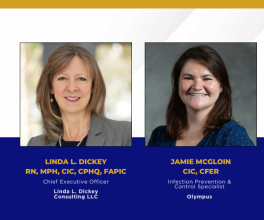
Listen to Amanda Call discuss her career pivot from nursing to medtech.
Performance Hurdles
When it comes to high procedural demand for colonoscopies, quality can’t take a hit. “I think the biggest challenge—and goal—for a gastroenterologist is that if you are performing screening exams, how can you prevent colon cancer?” asked Pannu. “How can you detect more polyps?” He knows the research. “Adenoma detection rates have been studied, and improving your adenoma detection rate can help with detecting more polyps in your screening exams, as well as [to] prevent colon cancer downstream.”1
But patient anatomy can present challenges. “When we are doing an exam, the patient is breathing…abdominal wall muscles are moving [and] your scope is going back and forth,” said Pannu. “Things are constantly moving, even if you stabilize the scope.” And some polyps are harder to detect, he added.
Serrated Polyps: The New Goalpost
“We have a particular subset of polyps called serrated polyps,” explained Pannu. “These are seen mostly in the right colon. They’re quite flat, and they are quite easy to miss if you’re not looking carefully or if we don’t have a clear picture on our screen,” he said. “Even this morning, I was noticing that I was using the new [EZ]1500 series scope with EDOF technology, and we had several serrated polyps in a patient in the ascending colon,” he said. “I paused, and thought that … with older scopes or older technology, I could have missed these polyps,” which is significant because “[some] serrated polyps can turn into cancer.”
Sessile serrated lesions, a specific type of serrated polyp that is considered to be premalignant, is now part of ACG/ASGE colonoscopy quality guidelines.1 “It is well known that … the screening guidelines recommend … shorter interval colonoscopies when you detect [serrated] polyps, so it is a very important task for us to detect these,”1,2 said Pannu. “I think if there is technology that helps us in improving the detection of these flat polyps, it will significantly make [a] clinical impact going forward.”
A Bigger Playing Field of View
“EDOF technology…[is] our extended field of view” technology, said Call, explaining that it’s the most recent Olympus contribution to imaging as part of EZ1500 series scopes, released in September 2025. EDOF technology “takes the beam of light and splits it so that you end up with a near and a far image that’s merged together to give you one very nice, optimized image.”3
An extended field of view has served Pannu in more complex procedures such as endoscopic mucosal resection (EMR), a technique used to remove sessile or flat lesions.4 “A common method of doing this—especially for lesions in the cecum or the right colon—is what we call underwater [EMR], where we take the air out of the colon and fill it with water and it stabilizes the scope, [and] it allows us to do a safe polypectomy,” Pannu explains.
A good view of the workspace is optimal.
“From screening exams to a third space endoscopy, there is a vast range of clinical cases that [EDOF technology] can be very helpful in.”
“I started noticing … with the 190 scopes and [EVIS] X1 endoscopy system that the pictures underwater were much more clear, but with the EDOF [technology in] the [EZ]1500 scopes, it is [an] even…bigger enhancement in identifying the borders of the polyp,” Pannu noted.
Pannu also does his fair share of third space endoscopy, in which submucosal dissection is performed for things like tumor removal.5 “In most of these cases, we want to do a prophylactic coagulation of the vessel,” explained Pannu. Seeing before cutting is key. “That is a big advantage using these scopes,” said Pannu. “Identification of vessels in the submucosa is easier with the [EZ1500 series] scopes and [EDOF] technology,” compared to older generation scopes.
Hear Dr. Pannu discuss more cases using EZ1500 series scopes and Red Dichromatic Imaging (RDITM) technology that helped detect arterial bleeding.
The Whole Visualization Package
“From screening exams to third space endoscopy, there is a vast range of clinical cases that [EDOF technology] can be very helpful in,” said Pannu. EDOF technology may be the latest in Olympus® imaging offerings, but Call points out that Pannu frequently uses Texture and Color Enhancement Imaging (TXITM) technology, available on the EVIS X1 endoscopy system,6 and the ENDOCUFFTM Vision (ECV) device that attaches to the distal end of a colonoscope to manipulate colonic folds during screening colonoscopies.7 She explained that ECV can be paired with TXI technology, which “enhances the color, brightness, and texture” to view lesions. Combining TXI technology with ECV has been shown to improve ADR by 13.5% in a prospective randomized controlled trial.8
“The image enhancement is electronic augmentation of the picture, and [ECV] is mechanical augmentation. When you combine the two you can have a really good exam,” said Pannu, adding that the “fingers of the ENDOCUFF device allow us to anchor behind folds in the right colon to assist in polypectomy.”
Overall, “the goal of the exam is to prevent colon cancer,” Pannu concludes. “Having improved image quality goes a long distance.”
Dr. Pannu is a paid consultant of Olympus Corporation, its subsidiaries, and/or its affiliates. The positions and statements made herein by Dr. Pannu is based on his experiences, thoughts, and opinions. The podcast was paid for by Olympus.
The EVIS X1™ endoscopy system is not designed for cardiac applications. Other combinations of equipment may cause ventricular fibrillation or seriously affect the cardiac function of the patient. Improper use of endoscopes may result in patient injury, infection, bleeding, and/or perforation. Complete indications, contraindications, warnings, and cautions are available in the Instructions for Use (IFU).
TXI and RDI technologies are not intended to replace histopathological sampling as a means of diagnosis.
EDOF, TXI and RDI are trademarks of Olympus Corporation, Olympus America, Inc., and/or their affiliates.
A rare but potential complication when using ENDOCUFF VISION™ device is the detachment of the device during the procedure. Be prepared to retrieve the device if this were to occur. Ensure ENDOCUFF VISION™ device is used only with compatible colonoscopes, that the colonoscope distal tip is in good condition, and that the device is fully seated on the distal tip prior to the application of lubricant to minimize the chance of detachment.
Ready to listen, watch, or subscribe to the podcast?
Want to learn more about EDOF technology and the imaging features of the EVIS X1 endoscopy system?
References
1. Rex DK, Anderson JC, Butterly LF, et al. Quality indicators for colonoscopy. Gastrointest Endosc. 2024 Sep;100(3):352-381.
2. Gupta S, Lieberman D, Anderson JC, et al. Recommendations for Follow-Up After Colonoscopy and Polypectomy: A Consensus Update by the US Multi-Society Task Force on Colorectal Cancer. Gastroenterology. 2020 Mar;158(4):1131-1153.e5.
3. Data on file with Olympus (DC00493386, DC00433276, DC00510434 and DC00567392).
4. Thiruvengadam SS, Fung BM, Barakat MT, et al. Endoscopic Mucosal Resection: Best Practices for Gastrointestinal Endoscopists. Gastroenterol Hepatol (N Y). 2022 Mar;18(3):133-144.
5. Nabi Z, Nageshwar Reddy D, Ramchandani M. Recent Advances in Third-Space Endoscopy. Gastroenterol Hepatol (N Y). 2018 Apr;14(4):224-232.
6. Data on file with Olympus (DC00489968).
7. Data on file with Olympus 12/09/2016.
8. Pattarajierapan S, Tipmanee P, Supasiri T, et al. Texture and color enhancement imaging (TXI) plus endocuff vision versus TXI alone for colorectal adenoma detection: a randomized controlled trial. Surg Endosc. 2023; 37:8340–8348.