Carpe Diem, GI Fellows! When It Comes to Endoscopy Technology, Don’t Be Shy, Give It a Try
Fellowship is a time to find your professional niche, whether it’s private practice, academic medicine, subspecialization, or other pursuits. It can also be overwhelming, according to Neal Mehta, MD, interventional endoscopist at the Center for Interventional and Therapeutic Endoscopy (CITE) at Rush University Medical Center in Chicago. As a core faculty member for the general GI fellowship, and program director for the interventional endoscopy fellowship, he also acknowledged that fellowship programs can vary. Some programs may be heavy on early procedural experience, while others may emphasize didactics and build up to endoscopic training. Dr. Mehta says neither approach is wrong. His advice to fellows at any program is to seek mentors, trial new technology, and be open to experience—now’s your chance.
Build on the Basics
Despite the onslaught of technological advancement in endoscopy, Dr. Mehta stresses that no feature is a substitute for the procedural basics, starting with the endoscope. “In the beginning, fellows may not even know how the buttons function,” he said. In addition to navigating how a scope works, proper ergonomics, and developing adequate endoscopic skills, he added, “They have a lot to absorb when it comes to managing the clinical side, in addition to the hands-on skills,” he noted. “Our job as instructors and teachers of endoscopy is to hammer out the basics,” such as “performing high quality endoscopic exams, visualizing and removing polyps, and effectively managing GI bleeds.”
Still, “the endoscopist toolbox continues to grow,” he observed. “Fifteen or 20 years ago, we didn’t have all the technologies that we do now.” He recognizes their place in fellowship training: “I think these technologies build on to the foundations of good clinical care, solid endoscopic skill, and knowing the purpose of the procedure that you’re doing,” said Dr. Mehta. “That’s what we focus on in the beginning.”
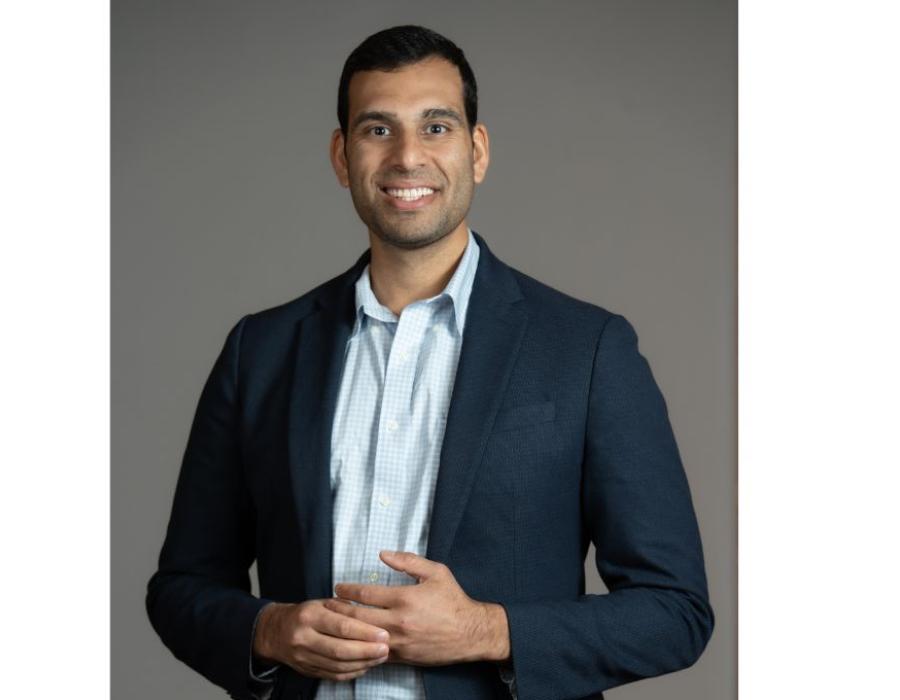
Neal Mehta, MD
Rush Medical Group
Bleeds as a Teaching Moment
Treating GI bleeds is one example of a technology teaching moment that builds on the basics. When encountering a bleed, he would coach: ‘OK, we have a visible vessel that's bleeding: What are the treatments that we have? What should we use to treat this effectively so it doesn’t rebleed and we can effectively manage it?’” Dr. Mehta adds that “Once the foundation has been established, we can introduce new tools as an assist to the basic skills in a step-wise fashion. Then as we develop their skills, we can say, ‘Let’s try this technology that may help localize where the bleed is faster, to more effectively treat it,” Dr. Mehta offered.
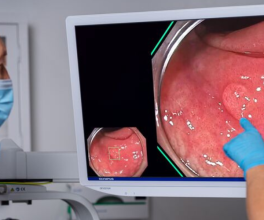
Red Dichromatic Imaging (RDITM) technology, released as a visualization tool with the EVIS X1TM endoscopy system, is one of these tools. RDI technology is designed to improve the visibility of bleeding points within the mucosa and enhance the visibility of deep blood vessels compared to white light.1 “Utilizing RDI [technology] to localize where the bleed is originating from can then assist a trainee to adequately clip or burn the lesion,” if that’s what the case warrants, Dr. Mehta explained.
Another Perspective on Visualization
Beyond bleeds, Dr. Mehta considered the addition of Texture and Color Enhancement Imaging (TXI™) technology to an endoscopic procedure. As part of the EVIS X1 endoscopy system, TXI technology is designed to improve visibility of subtle tissue differences1 which has been shown to increase ADR compared to white light.2
“I think there's always challenges when you adopt new technology, especially for endoscopists who have been doing it for many years,” he noted. In that sense, fellows may have an advantage over their instructors. “I think it’s nice as a fellow to be introduced to new technology. They aren’t so ingrained in the old ways of how you used to do things.”
As with any add-on feature, he stresses, “Our goal is to say, ‘there’s a variety of new technologies out there, and they build on foundations that you’ve already learned. This is your time to be exposed to it all and you can choose what you want to utilize, what you feel is most helpful to you when you go into independent practice.’”
“This is your time to be exposed to it all and you can choose what you want to utilize, what you feel is most helpful to you when you go into independent practice.”
It’s All in the Eyes
In that sense, Olympus’ Extended Depth of Field (EDOFTM) technology in the EZ1500 series endoscopes is no different. EDOF technology was released to the market in September 2025 and allows for a wide depth of focus that keeps an image sharp.3 Dr. Mehta encourages fellows to use scopes with EDOF technology, and he stresses its use as a teaching tool during a colonoscopy “to train a fellow’s eyes to locate and identify abnormalities that may not have been as easily visible previously.”
TXI and EDOF technologies as well as other visualization tools are designed “to pick up abnormalities such as sessile serrated lesions or small right sided polyps that we know increase your risk of developing colorectal cancer,” said Dr. Mehta, nodding to ASGE/ACG updated guidelines on quality indicators for colonoscopies.3
Professional Societies & Industry Partners
Industry partners can also foster training and trialing of endoscopic technology, according to Dr. Mehta. “What really resonates with fellows is their ability to put their hands on the scope and try these new devices,” he said. “That’s why I really encourage in-services. Try a scope, try it in a case, that’s the best way to learn.” He also acknowledged platforms like Olympus Continuum™ that offers a GI on-demand library of training videos, hands-on courses, and educational materials.
Networking, education, and career events outside of fellows’ institutions are equally important, which is why Dr. Mehta encourages fellows to attend medical society conferences offered by ACG and DDW® for example. “There’s also a lot of local/regional conferences as well,” he added. “I think it’s a great way for fellows to meet peers across the country.”
- DDW® (Digestive Disease Week) is an annual conference sponsored by leading medical societies.
- AGA’s Fellows & Early Career page has information on DDW attendance and other programs.
- AGA’s Small Talk, Big Topics is a podcast for trainees and early career GIs.
- ASGE’s Fellows Programs page offers training, resources, and education opportunities.
Fellows may take heart that “endoscopy is very personalized,” said Dr. Mehta. “Be open to trialing different things,” and “scope with multiple attendings during fellowship,” he advised. “I want our fellows’ mindset to be: There’s so much out there. It’s OK to explore what tech is out there. The goal should be finding what you want to adopt into your own practice, and how to build your own skills, and there’s a lot of different ways to do it.”
Dr. Neal Mehta is a paid consultant of Olympus Corp. and/or its affiliates.
TXI and RDI technologies are not intended to replace histopathological sampling as a means of diagnosis.
EDOF, TXI and RDI are trademarks of Olympus Corporation, Olympus America, Inc., and/or their affiliates.
Visit the Olympus® Fellows Community Page to access Olympus Continuum™ resources and Olympus sponsored events.
References
- Data on file with Olympus (DC00489968).
- Young E, Rajagopalan A, Tee D, et al., Texture and Color Enhancement Imaging Improves Colonic Adenoma Detection: A Multicenter Randomized Controlled Trial. Gastroenterology. 2024 Feb;166(2):338-340.e3.
- Data on file with Olympus (DC00493386, DC00433276, DC00510434 and DC00567392).
- Rex DK, Anderson JC, Butterly LF, et al. Quality indicators for colonoscopy. Gastrointest Endosc. 2024 Sep;100(3):352-381.